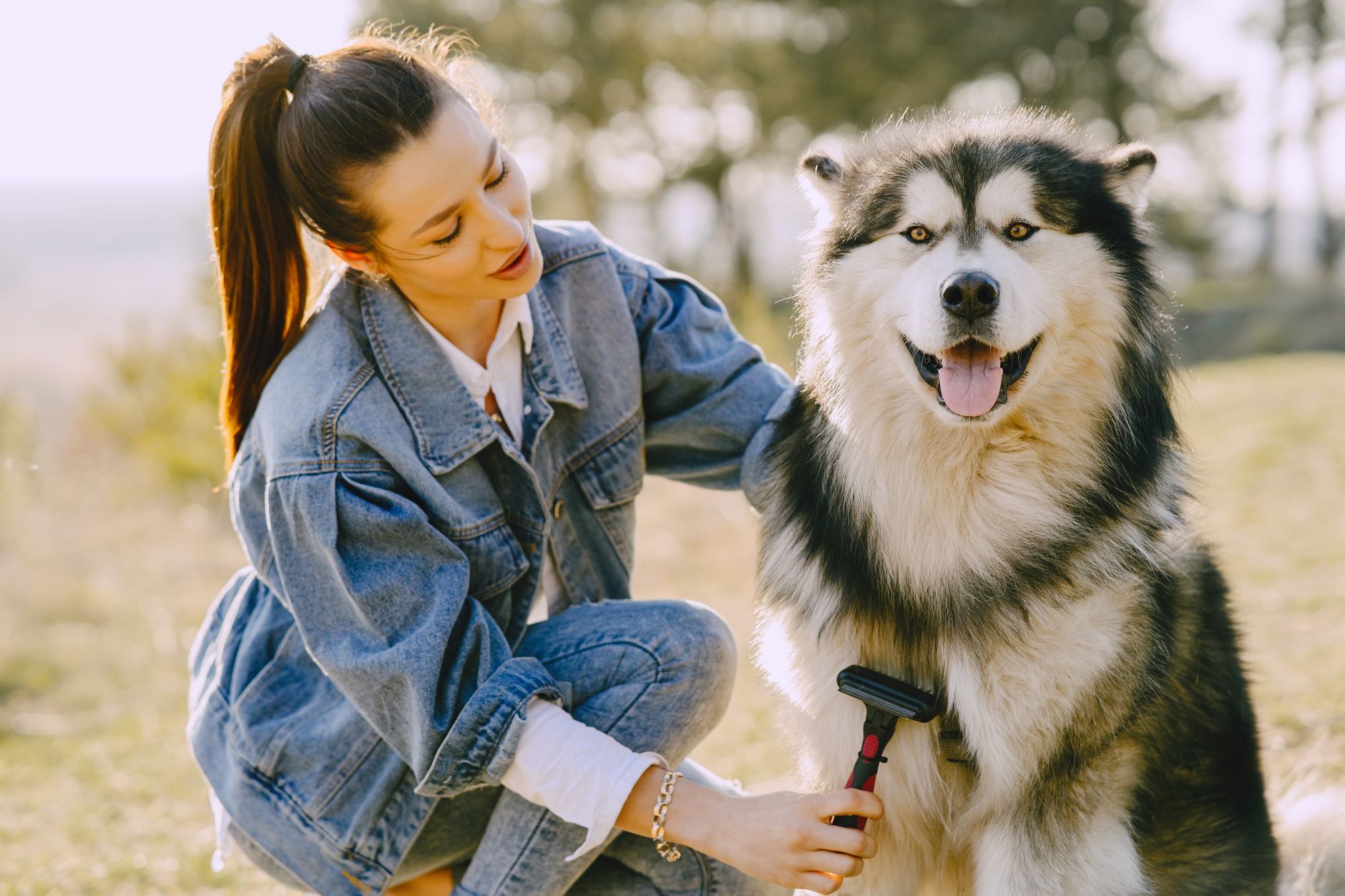
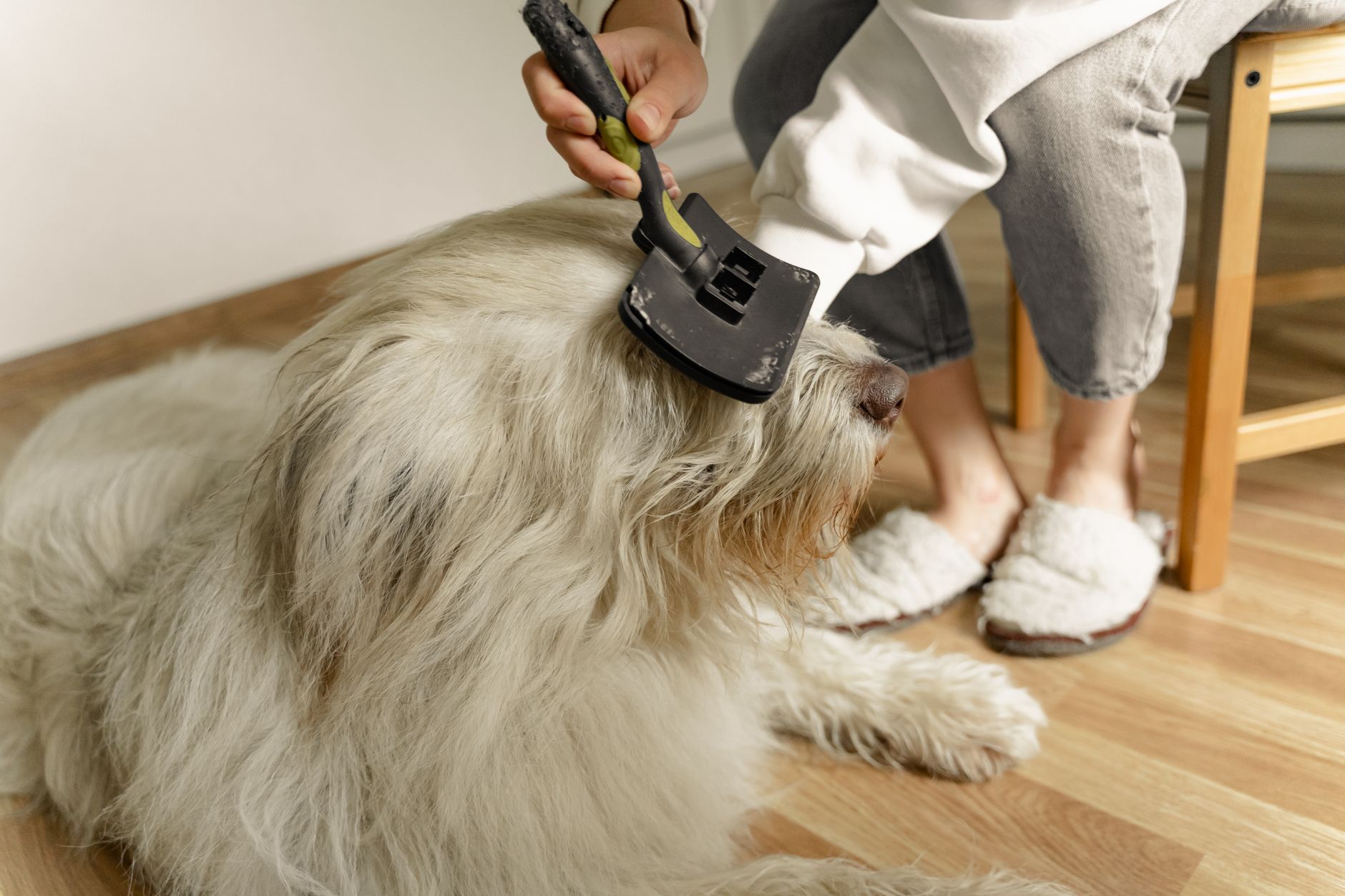
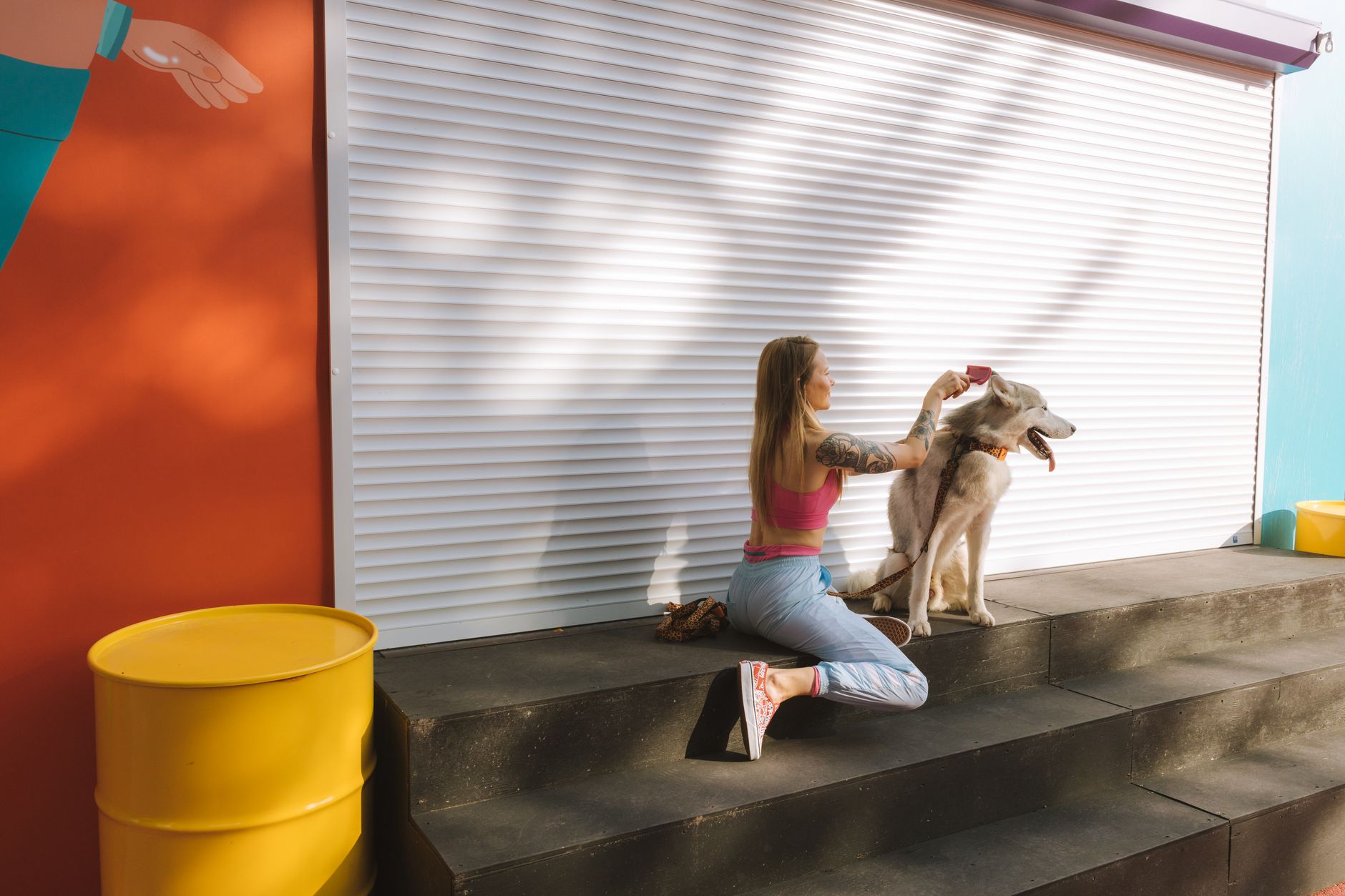
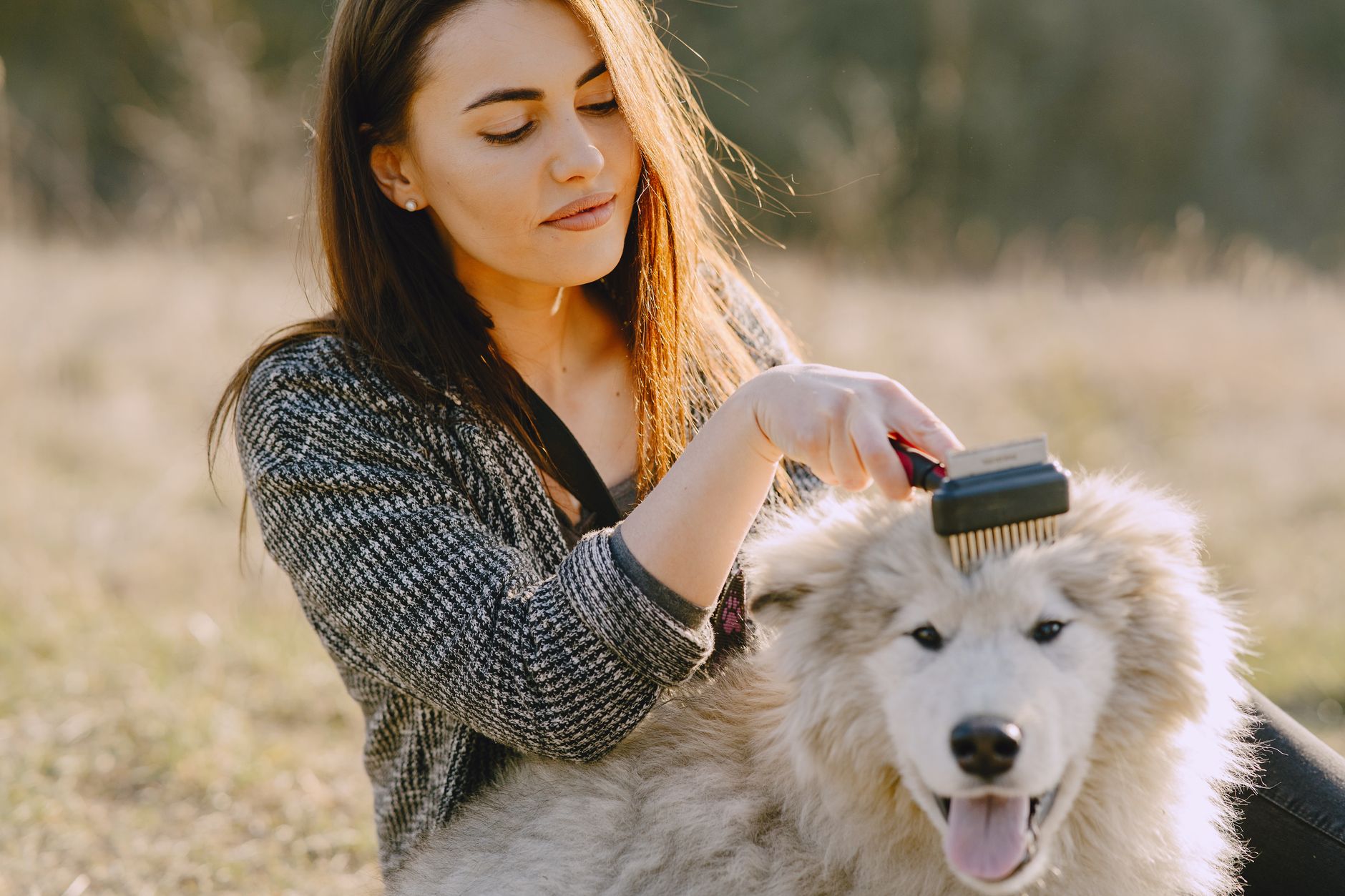
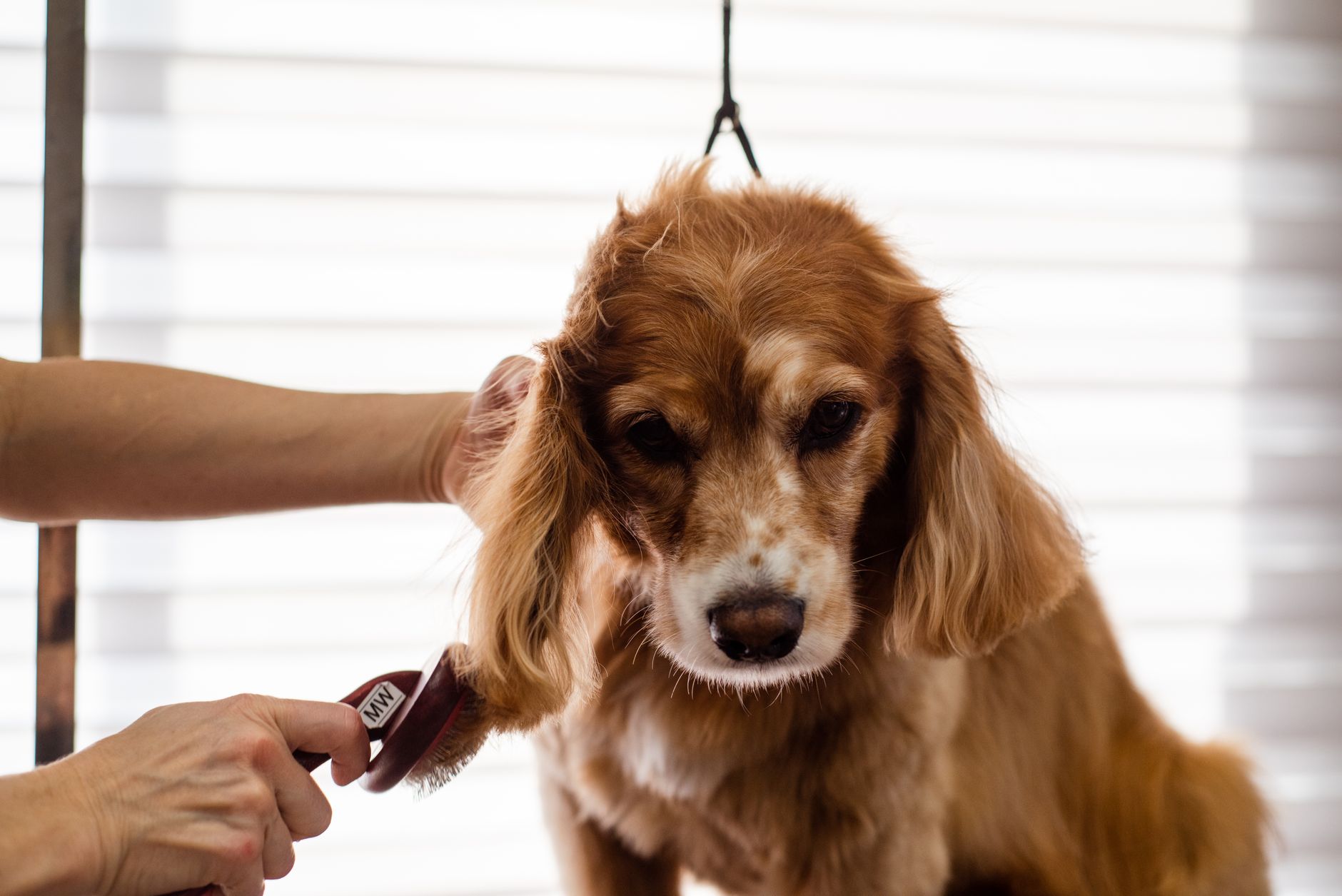
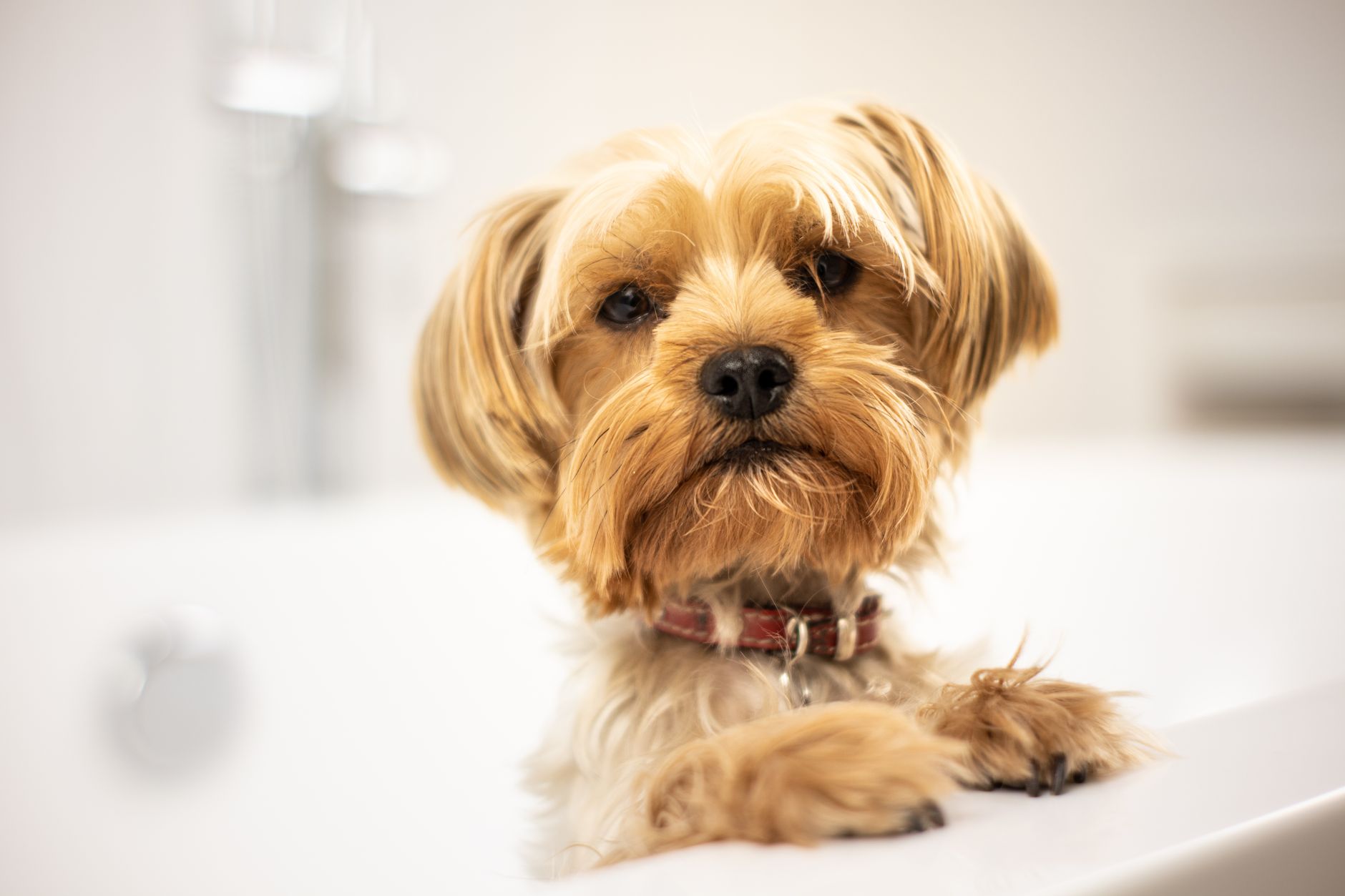
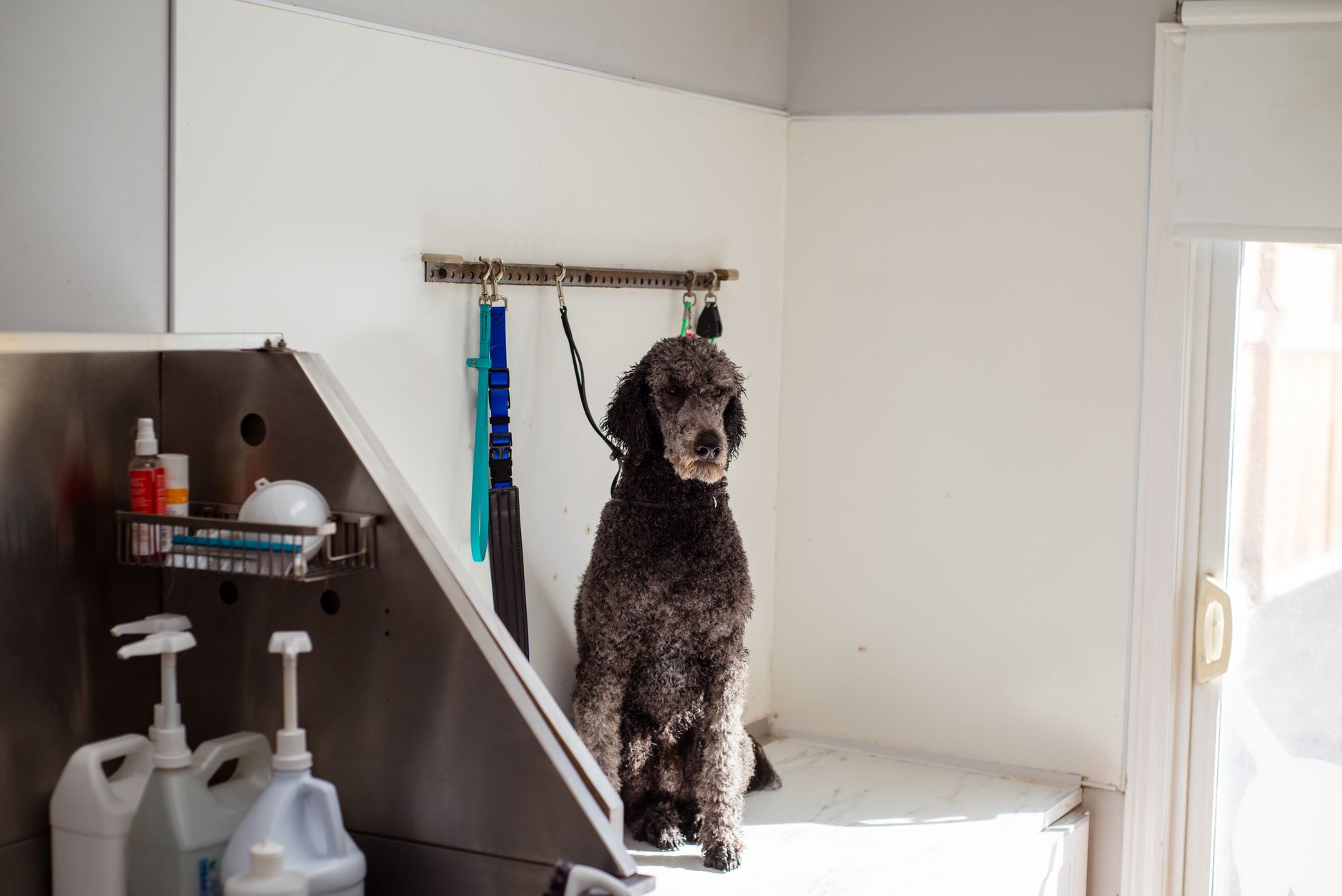
Fall is peak mat season for double-coated dogs. As the undercoat blows out ahead of winter, loose fur tangles with the topcoat faster than most owners expect, and a coat that looked fine a week ago can turn into a sheet of felt behind the ears, in the armpits, and along the hips. Brushing out a matted double coat safely takes patience, the right tools, and knowing when to stop and call a professional.
This guide walks through what a double coat actually is, how to brush one out at home without hurting your dog, and when the job belongs to a groomer instead of a pair of hands at the kitchen table.
What makes a double coat mat so fast
A double coat has two layers: a soft, dense undercoat that insulates and sheds heavily twice a year, and a longer, coarser topcoat (or guard coat) that repels water and dirt. Breeds like Huskies, German Shepherds, Corgis, Golden Retrievers, and Chow Chows carry this structure. The problem is mechanical, not cosmetic: as the undercoat releases, loose fur gets trapped against the skin by the topcoat instead of falling away. Friction from walking, lying down, or a harness rubbing the same spot speeds up the tangling, which is why mats cluster in predictable places — behind the ears, under the collar, in the armpits, along the tail base, and behind the hind legs.
Left alone, a mat tightens every time the dog moves. A small tangle becomes a dense pad that pulls on the skin underneath, traps moisture, and can hide irritation or early skin problems from view. That is the main reason groomers treat heavy matting as a welfare issue rather than a cosmetic one: a coat that looks "fine" under loose fur can be hiding a mat pulling tight against the skin.
You do not need a professional kit, but a few purpose-built tools make the difference between a productive ten minutes and a frustrating hour:
Undercoat rake — a row of rounded teeth that reaches through the topcoat to pull loose undercoat out without cutting the hair.
Slicker brush — fine, slightly bent wire bristles for finishing and smoothing after the rake has done the bulk of the work.
Wide-tooth mat comb or dematting tool — for working through a mat's edges in small sections rather than tearing through it.
A leave-in detangling spray — makes dry, brittle mats easier to separate without extra pulling. Check with a groomer or pet store for a product suited to your dog's coat before relying on it as a shortcut.
A pin brush or bristle brush alone usually is not enough on a double coat — it glides over the top layer and misses the packed undercoat underneath, which is exactly where mats start.
It is also worth clearing fur out of a slicker brush or rake between sessions. A clogged brush loses its ability to separate hair and starts pulling instead of combing, which is uncomfortable for the dog and makes the job slower, not faster. Keep sessions short — ten to fifteen minutes at a time is usually enough for a dog that is not used to being brushed, and it is easier to ask for a few short sessions across a week than one long one that tests the dog's patience and yours.
Puppy coats and the "blowing coat" transition
Puppies with double-coat breeding often lose their soft puppy fluff and grow in the adult undercoat somewhere between six months and a year old, and that transition can mat just as fast as a seasonal blowout in an adult dog. It catches a lot of first-time owners off guard because the puppy coat never needed much more than an occasional pass with a soft brush, and then within a few weeks the same routine stops being enough. Starting undercoat-rake sessions early, before the adult coat comes in fully, also gets a young dog used to the sensation, which tends to make later shedding seasons easier to manage with less resistance at the brush.
Brushing out a mild mat step by step
Start dry, never wet. Water tightens a mat and makes it harder, not easier, to separate — never bathe a dog with mats still in the coat.
Isolate the mat with your fingers, holding the base close to the skin so any pulling tension lands on your hand, not on the dog.
Work from the outer edge in, using the mat comb or your fingers to peel apart small sections rather than attacking the center first.
Switch to the undercoat rake once the mat has loosened, drawing it through in the direction of hair growth to clear the loose undercoat trapped inside.
Finish with the slicker brush in short, line-by-line strokes to smooth the area and check for any remaining tangles.
Stop if the dog is reacting to pain, not just mild fidgeting. A mat that will not loosen with gentle work, or one tight enough that the skin tents when you try to separate it, is a job for a groomer with clippers, not more brushing at home.
Working in short sessions over a few days is often kinder — and more effective — than trying to clear a whole coat in one sitting.
Some mats cannot be safely brushed out at all. If the mat is close to the skin, larger than a couple of inches, or the skin underneath looks red, moist, or broken, stop trying to brush it and book a groomer. Professional groomers use clippers designed to get under a mat without a blade touching the skin, and they can judge, by feel, how much tension a mat is putting on the dog before more brushing becomes harmful rather than helpful. A vet visit, not a grooming appointment, is the right call if the skin under a mat looks inflamed, is bleeding, or has an odor — those are medical questions a groomer is not positioned to answer.
Groomers describe the choice bluntly: brush it out, or shave it off. There is rarely a middle option once a mat is packed tight enough to resist a comb. A full-coat shave-down after neglected matting is not a cosmetic failure on the owner's part so much as the safest way to stop a bad situation from getting worse, and most groomers will say so without judgment. If you're looking for a groomer experienced with heavy coats, the pet groomers directory for Colorado and listings in Denver are a place to start comparing options.
What a professional dematting appointment looks like
A groomer handling significant matting will usually start by assessing the coat dry, checking how close the mats sit to the skin and whether brushing is still realistic. For moderate matting, many groomers will work through sections with a mat splitter or comb before a bath, since bathing first can lock tangles tighter. For heavy matting, a shave-down with a guard comb is often the safer route — it is faster, far less stressful for the dog, and avoids the repeated pulling that brushing out a severe mat would require. Ask what the plan is before the appointment starts, since the right approach depends on how the coat actually feels, not just how it looks. The pet groomers serving Minneapolis, Minnesota include several spas that specifically mention dematting and de-shedding services on their listings.
Mobile groomers and salons that take double-coated breeds regularly will usually have the de-shedding tools — a high-velocity dryer in particular — that make the undercoat release faster and more thoroughly than a brush alone ever will at home. That is worth asking about if your dog blows coat heavily every spring and fall. The pet groomers serving Portland, Oregon and Chicago, Illinois both list several salons that handle heavy-coated breeds regularly.
Located in ActivSpace on Raleigh, 1722 NW Raleigh St #117, Portland, OR 97209
★★★★★5.0(38)
Self-service dog washes as a middle option
Between a full at-home brushing session and a professional groom, a self-service dog wash can be a useful middle step, particularly for a dog that tolerates handling well but has a coat heavier than a quick home brush can manage. These facilities typically provide a raised tub, professional-grade dryers, and sometimes grooming tools on-site, letting an owner do the bathing and brushing work themselves with better equipment than most households own. It will not replace a dematting appointment for a badly tangled coat, but it is a reasonable option for routine de-shedding between visits. Dog washes and groomers in Seattle, Washington are listed alongside each other in the directory, which makes it easy to compare a self-serve tub against a full-service appointment.
Not every coat needs the same routine, and over-brushing a coat that does not need it is as pointless as under-brushing one that does.
Coat type
Example breeds
Mat risk
Suggested brushing
Best tool
Double coat
Husky, German Shepherd, Corgi, Golden Retriever
High, especially during seasonal shedding
2–3x weekly; daily during shedding season
Undercoat rake + slicker brush
Silky/single coat
Cocker Spaniel, Shih Tzu (long-coated)
High if kept long
Every 1–2 days
Pin brush + mat comb
Curly/wool coat
Poodle, Doodle mixes
Very high; mats form close to the skin
Daily
Slicker brush with line brushing
Short/smooth coat
Beagle, Labrador, Boxer
Low
Weekly
Rubber curry brush
If you are not sure which category your dog falls into, or the coat is a mixed type, a groomer at your dog's regular appointment can tell you quickly and show you the technique for that specific coat. The pet groomers listed for Boston, Massachusetts are a reasonable place to ask, since most will give quick coat-type advice even outside a booked appointment.
Red flags that mean it is time to call a vet, not a groomer
A mat itself is a grooming problem, but what is sometimes found underneath it is not always. Signs that warrant a veterinary visit rather than (or before) a grooming appointment include: skin that looks red, raw, or has an open sore once the mat is removed; a strong odor coming from a matted area; the dog flinching or crying at a light touch near the mat even before brushing starts; or swelling under the coat. Groomers who find these signs during a dematting appointment will often recommend a vet check before continuing, and that is worth listening to rather than pushing through.
The takeaway
Brushing out a double coat is a seasonal habit, not a one-time fix — the goal is to stay ahead of mats with regular undercoat removal rather than catching up after they have packed tight. Work dry, use an undercoat rake before a slicker brush, stop at the first sign of real pain rather than fidgeting, and treat a mat that will not loosen as a sign to book a groomer rather than a reason to brush harder. For a coat that has already gotten away from you, a professional dematting appointment — or in some cases a shave-down — is the safer and kinder route than continuing to pull at a mat sitting close to the skin.